



Somewhere in the first half of this year, the scales quietly tipped. According to BriteCo's 2026 Jewelry, Diamond & Watch Price Index, lab-grown diamonds appeared in 51% of newly appraised engagement rings from January through June 2026. Back in 2019, that number was 6%.
Six percent to a majority in about seven years. At our bench in Atlanta, that feels less like breaking news and more like a normal Tuesday. But the numbers underneath the headline say some fun things about where engagement rings are heading, so we pulled up a stool, read the reports, and added our studio's two cents.
The number everyone is talking about
BriteCo is a jewelry insurer, so its index is built on appraisals: real rings people had valued for insurance, across all 50 states and Washington, D.C., from January 2019 through June 2026. That makes it a useful lens. These aren't survey answers about what someone might buy one day. They're rings on hands.
The same index puts the 2025 median sales price of a lab-grown engagement ring at $4,557, next to $12,961 for a natural one, and shows lab-grown price per carat sliding from $4,622 in 2019 to $2,057 in 2025.
Our family has been setting stones since 1994, when this studio began in South Korea as 행복귀금속 (Happy Jewelers). We've watched plenty of trends arrive and leave. This one isn't a trend. It's the new baseline, and it moves the spotlight somewhere we love: onto the setting.
Two carats is the new one carat
Here's the stat that made Mr. Lee look up from his loupe: per BriteCo, the median engagement ring center stone doubled, from 1.01 carats in 2019 to 2.0 carats in 2025.
Industry analyst Edahn Golan told JCK that trade-level lab-grown prices fell 13% year over year in the second quarter, with 2-carat stones down about 20% while 1-carat rounds rose 1%. His read: "Demand for 1 ct. stones has slowed as 2 and 3 ct. diamonds have become more affordable."
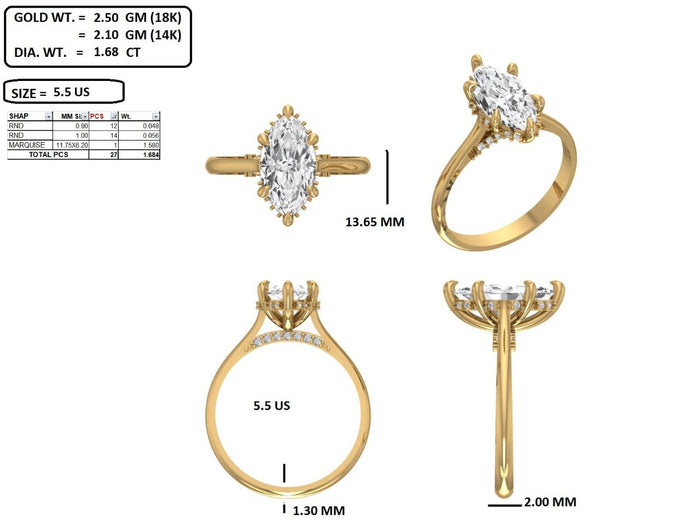
Bigger stones are wonderful. They also change the engineering. A 2-carat oval sits taller and wider than a 1-carat, so the prongs need to be shaped for it, the gallery underneath needs room to breathe, and the band has to balance the extra weight so the ring stays upright on the finger. (If yours likes to spin, bishop bumps are a lovely little fix.) That's why each claw gets fitted to the exact stone going into it, not to an average one.

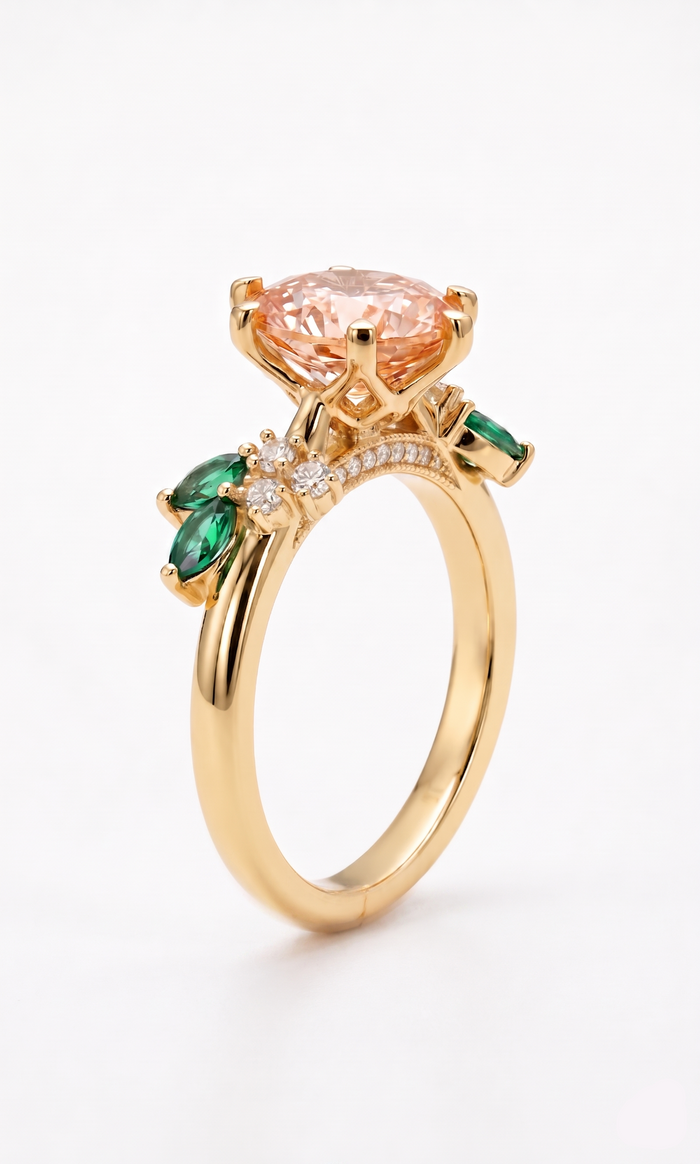
When the diamond stops being the rare part, the setting becomes the story.
Our Classic Six is a good example: six prongs instead of four on an oval, which spreads the grip around a bigger stone and keeps the outline soft and round.
Yellow gold is back on top
This one made the whole studio smile. BriteCo reports that yellow gold overtook white gold as America's jewelry metal in 2025, 39% to 38%. In 2019, white gold held 51%. Platinum grew too, from 11% to 16%.
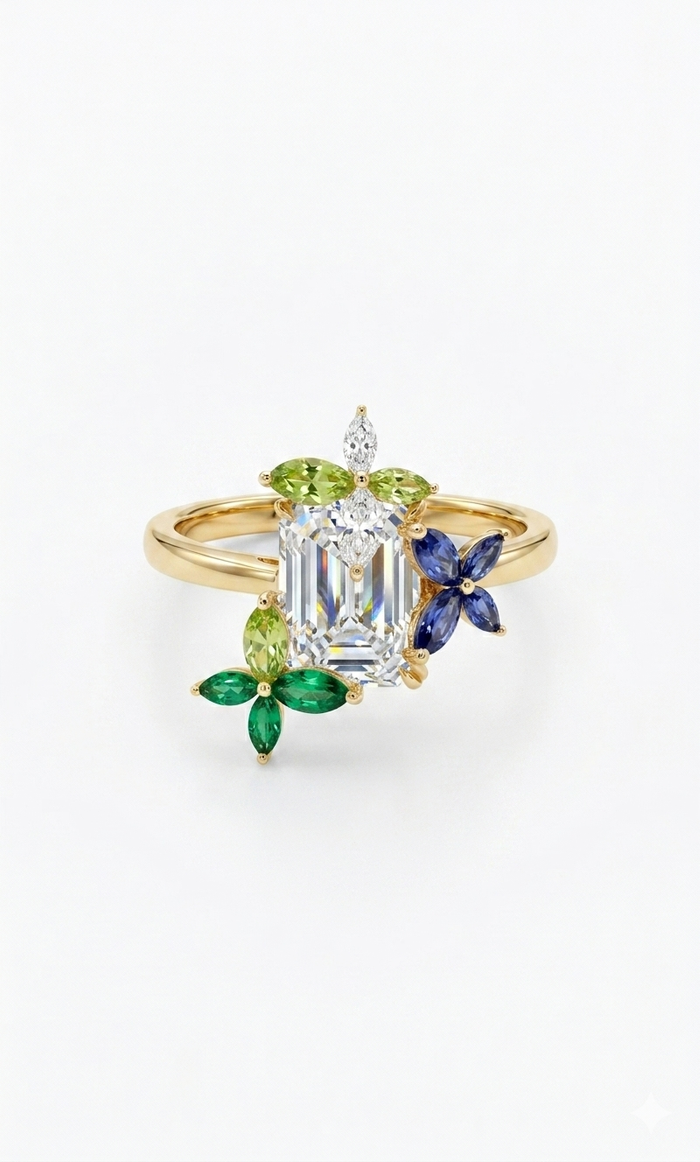
Warm gold under a bright white diamond has a glow that feels both vintage and very now, and it flatters floral work in particular. Take The Lotus: an elongated marquise held in floral talon prongs, petal-like in shape but precise where they meet the stone. In yellow gold, those petals read like a flower in late afternoon light.

Can't pick a side? The Solen and The Whisper Four are also offered in Two-Tone, for the diplomats among us.
A quick cheat sheet for the lab-diamond era
- Ask for the paperwork. Our certified diamonds come with an IGI certificate, and the report number lets you look up the grading yourself.
- Don't settle on color and clarity. Our standard grade is DEF color, VS2 clarity or better. With lab-grown, there's little reason to trade whiteness for size.
- Size to the hand, not the headline. Two carats is the median, not a rule. An elongated shape like a marquise or oval can look longer on the finger than a round of the same weight.
- Look at the prongs. A larger stone deserves claws shaped for it. Ask how the setting is built, not only what sits in it.
- Curious how they're grown? Our CVD vs. HPHT guide walks through both methods, and the 4 C's guide covers grading.
What doesn't change at our bench
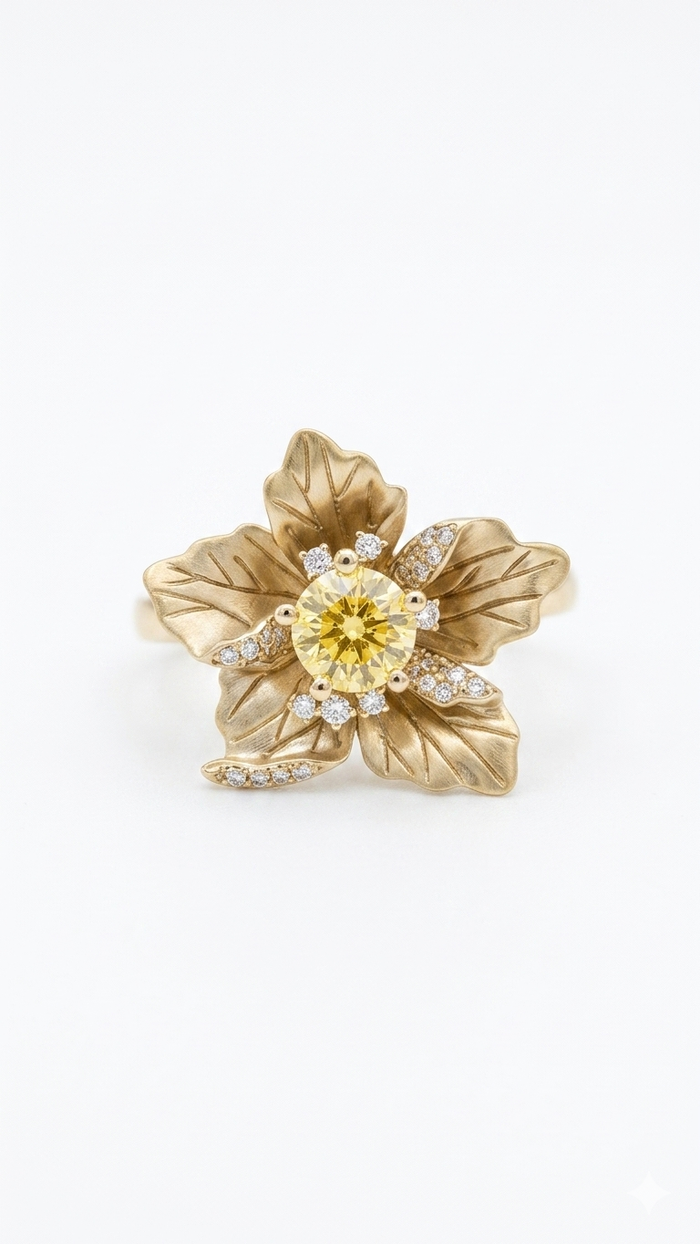
Market share can swing. How a ring gets made shouldn't. Every piece we make is handcrafted from scratch, and some of the details take real time: Mr. Lee's hand-engraving can take six to seven hours on a single band. The butterflies on The Jardin came from our family's garden in Korea, long before anyone was counting lab-grown percentages.
And one of our favorite touches is one most people never see: Stone Inlay®, a birthstone set inside the band, complimentary on our pieces. A little secret between you and the person wearing it.
Every ring ships free worldwide in the Luther's Brown Box and is backed by our lifetime warranty.
So, now what?
Now the fun part. If the stone is no longer the hardest thing to get, the question becomes: what should the ring around it look like, and whose story should it tell? Browse our engagement rings for ideas, or if you already have a picture in your head, start a custom project with our family team. We'd love to build it with you.