




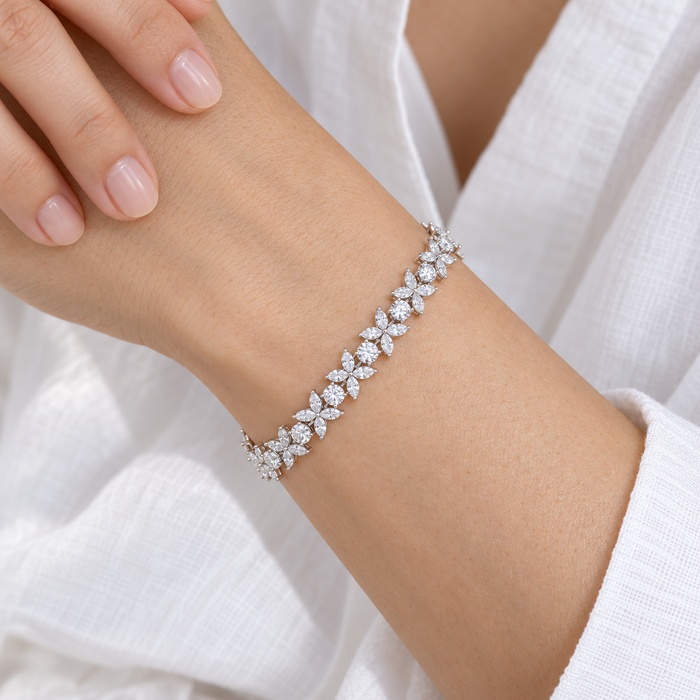


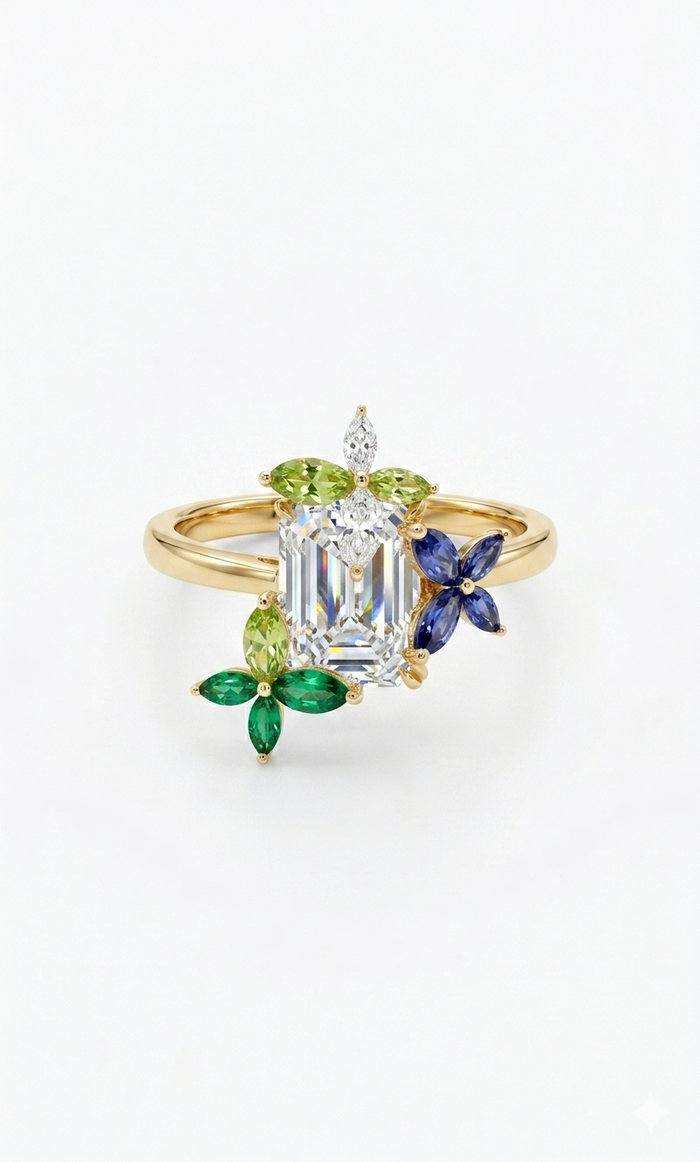
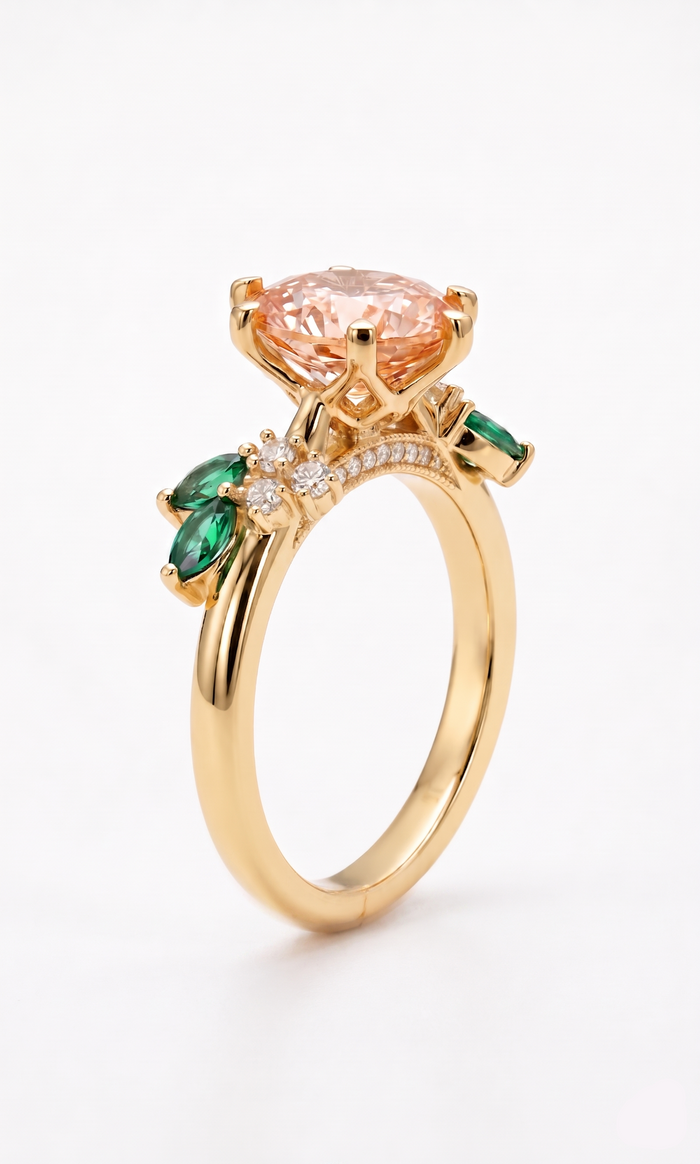
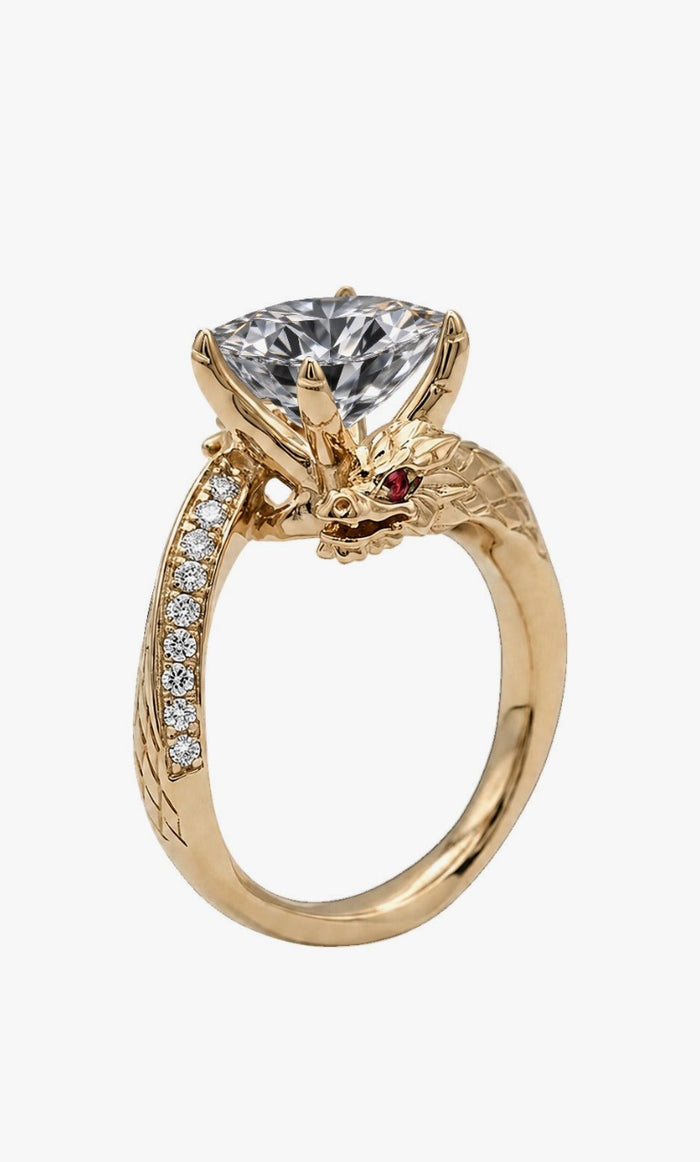
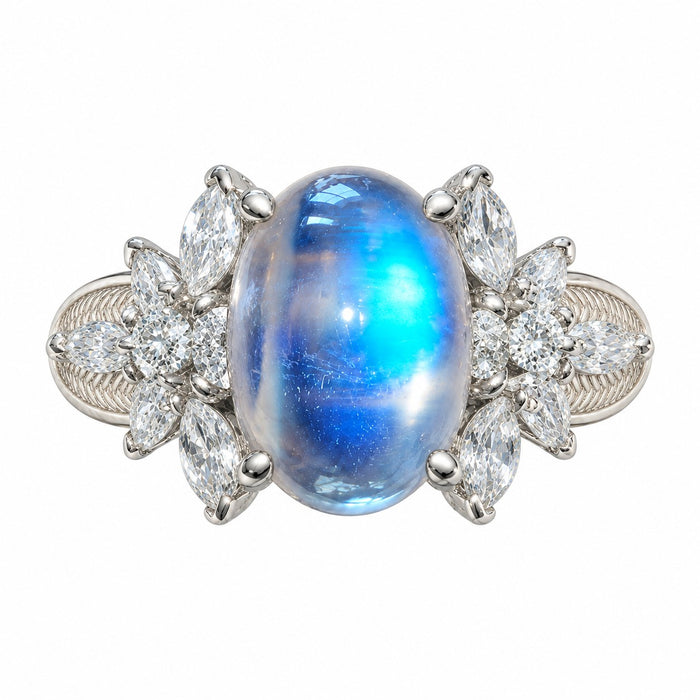
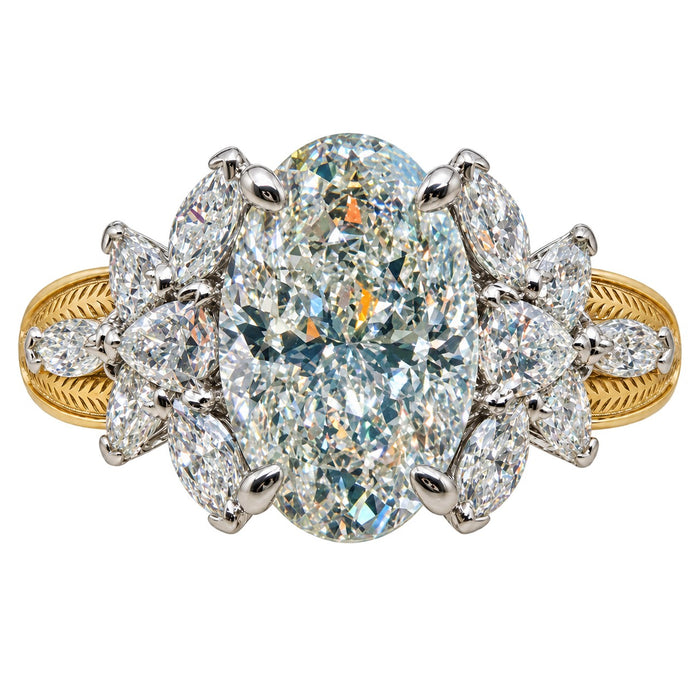
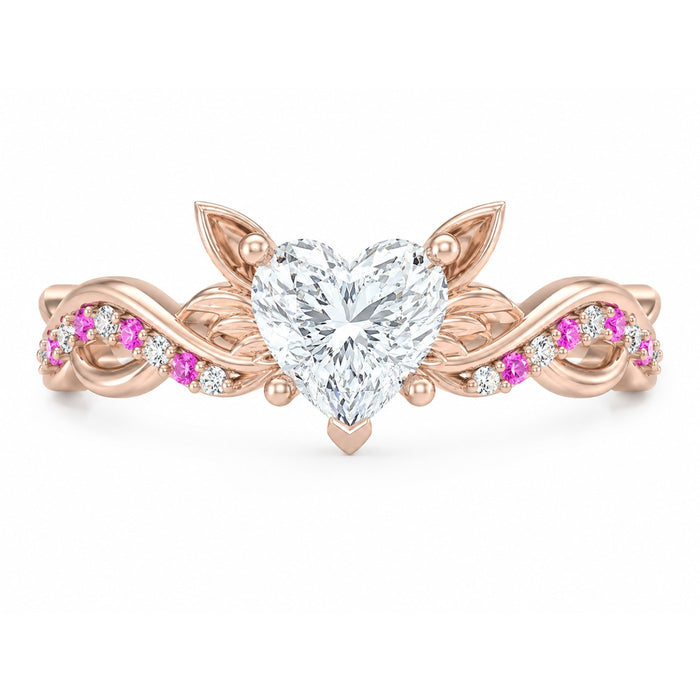
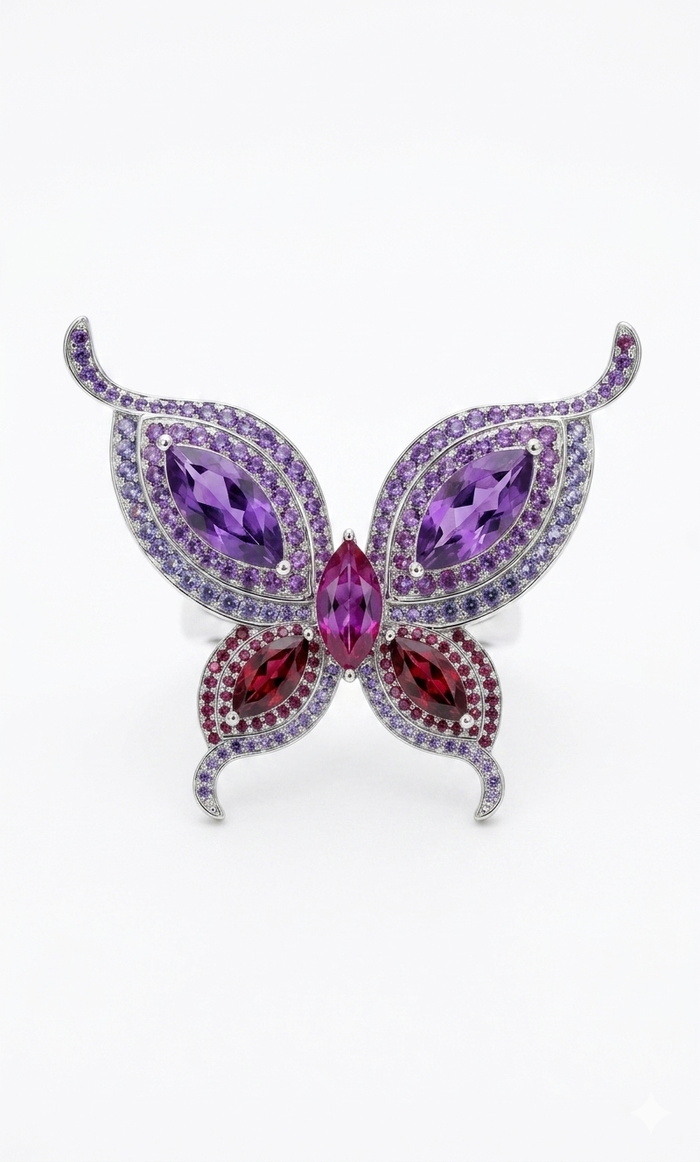
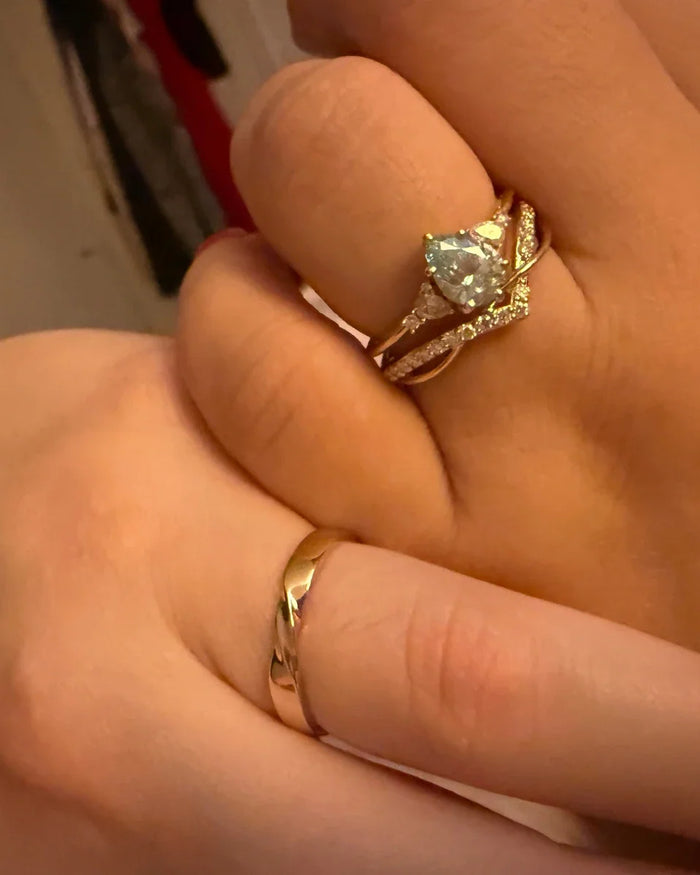


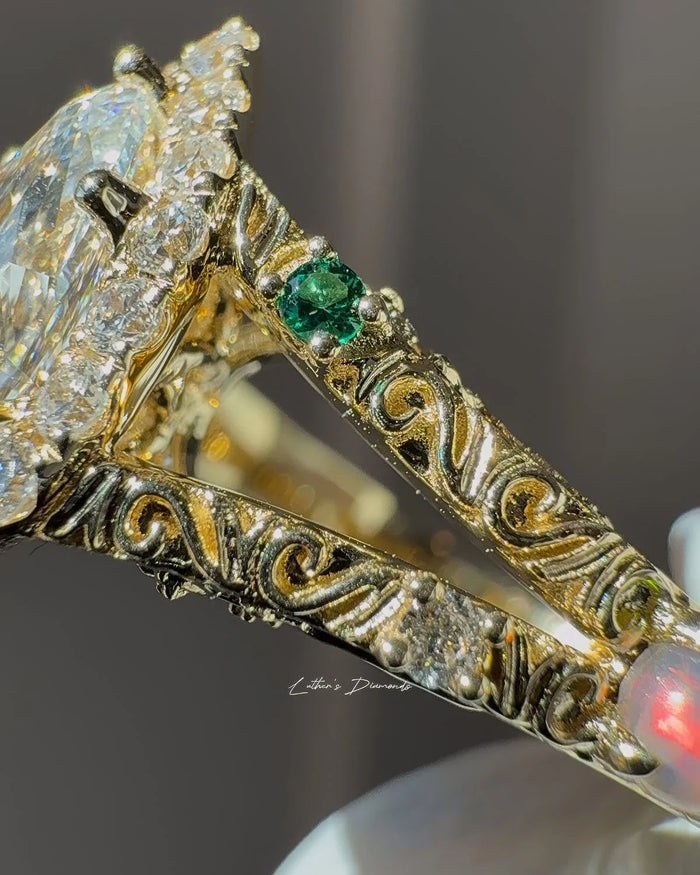
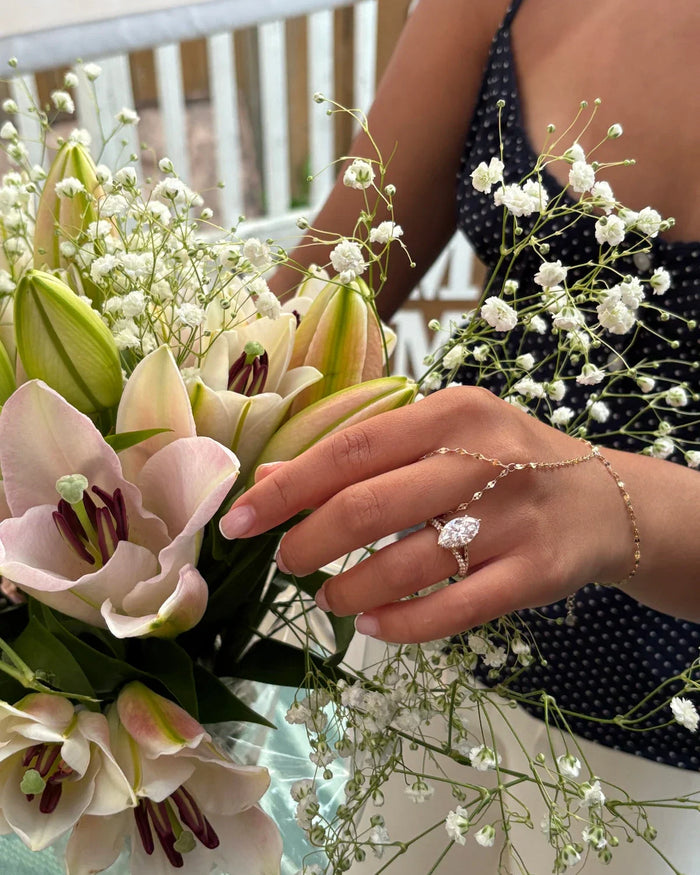
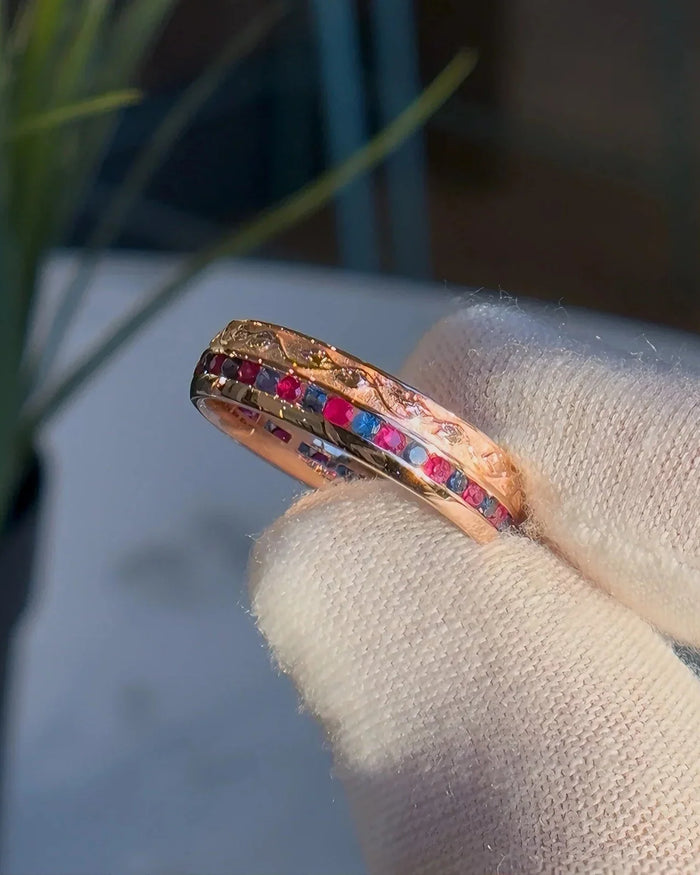





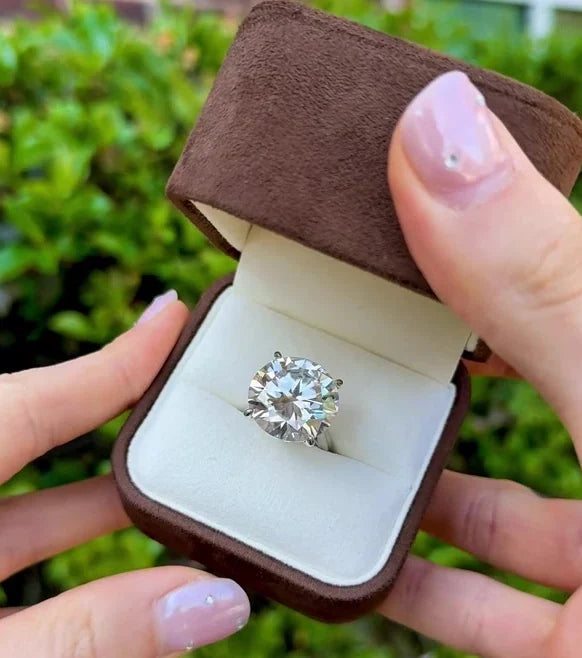
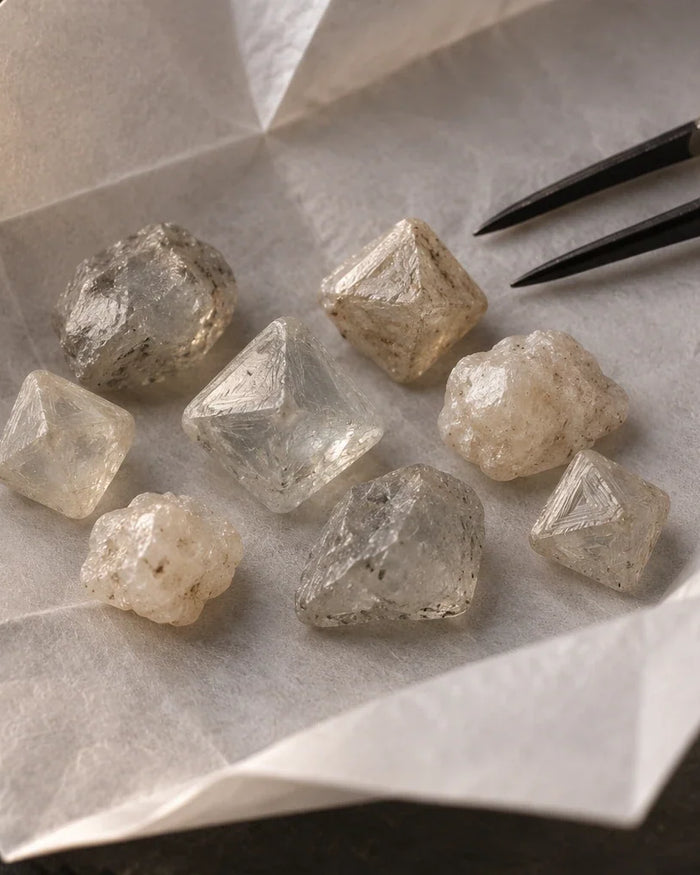
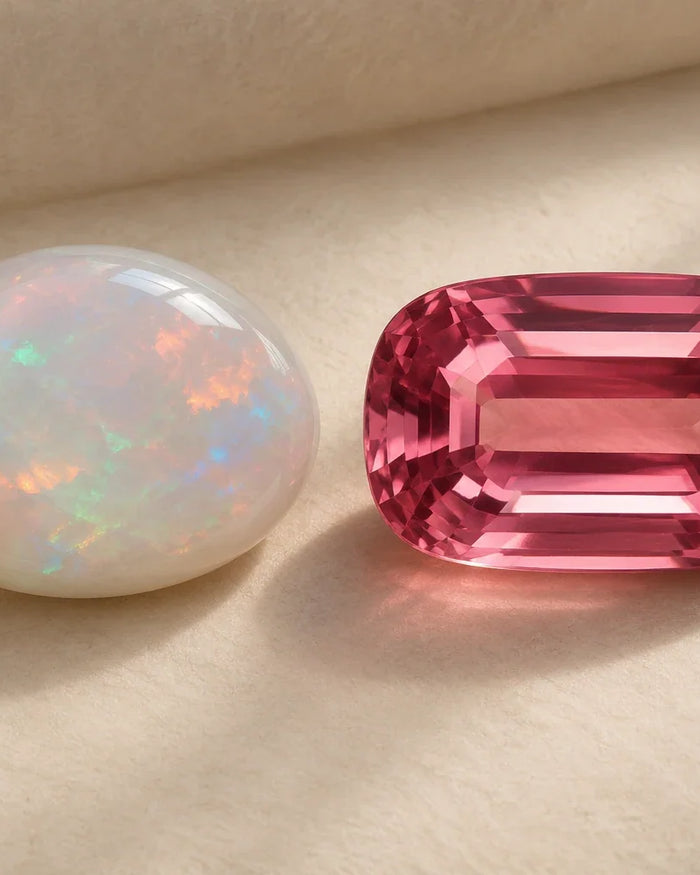

A face-up view is a good place to start. Ask to see your own stone turn in the light.
If we had two diamonds in front of you, we’d turn them in the light before we handed you the reports. Start with the one you like looking at. Then use the four Cs to understand what you’re seeing.
1. Cut — turn the stone
Shape is the outline you can trace with a finger. Cut describes how the facets work together. Watch a face-up video and notice where brightness moves as the stone tilts. When you read the report, look for cut, polish and symmetry as separate entries where the lab provides them. Grading conventions vary by shape and laboratory.

2. Color — look beside the metal
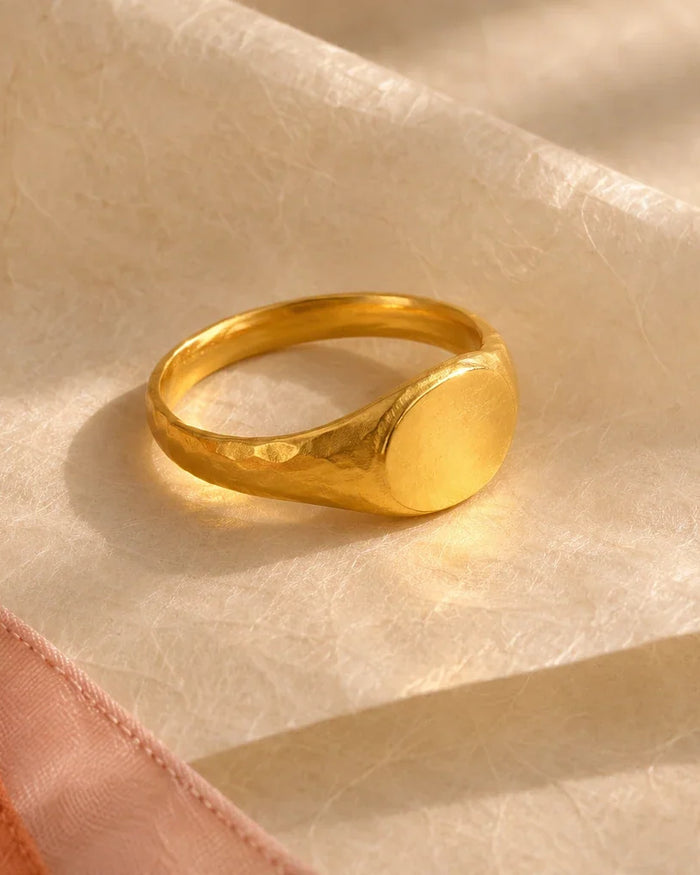
For diamonds on the D–Z scale, D, E and F are the colorless grades. Our studio selects within that range for our standard lab diamond builds. Ask to see your choice beside the metal you plan to wear. Yellow gold and white gold put different surroundings around the same stone.
3. Clarity — step back from the close-up
A lab assesses clarity under 10× magnification. Our standard lab selection starts at VS2. The location of an inclusion and the way the stone is cut can affect what you see. Look once close up, then again at the distance you’d normally see your hand.
4. Carat — ask for millimeters
One carat weighs 0.2 grams. Two stones of the same weight can have different outlines and face-up dimensions. If you’re deciding between an oval and a round, ask for the length and width of both, then compare how much of your finger each covers.
Compare diamonds with our family team
Sources · GIA · Reading a diamond grading report · GIA · Observations of fancy-shaped diamonds


