





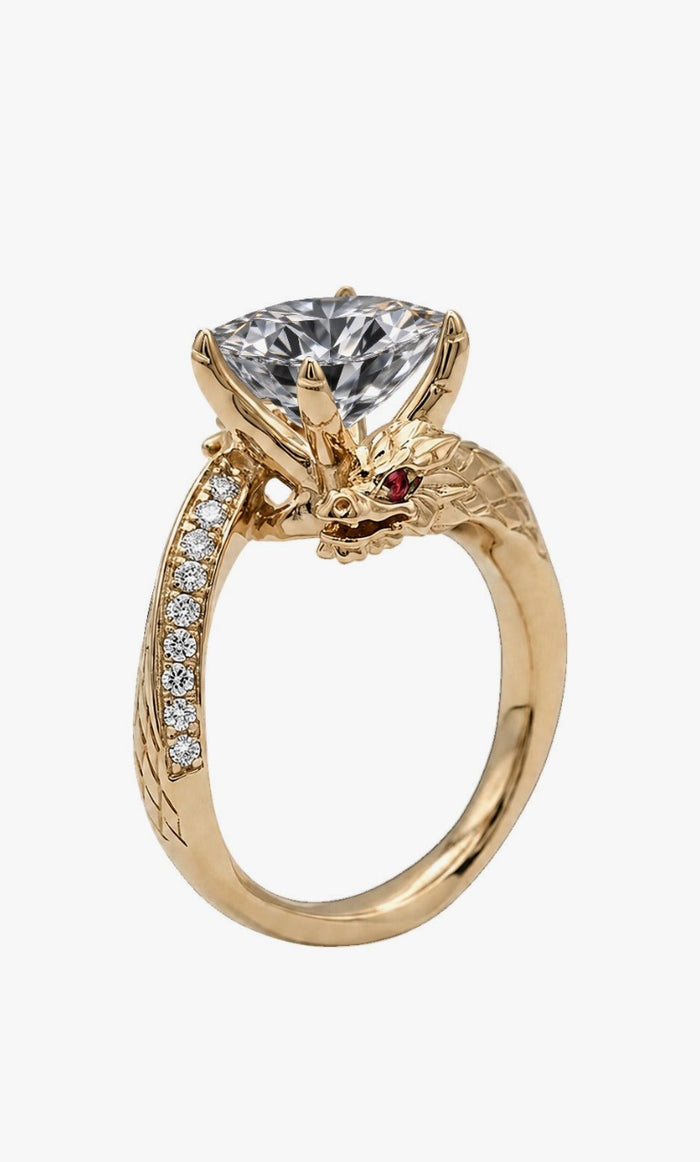
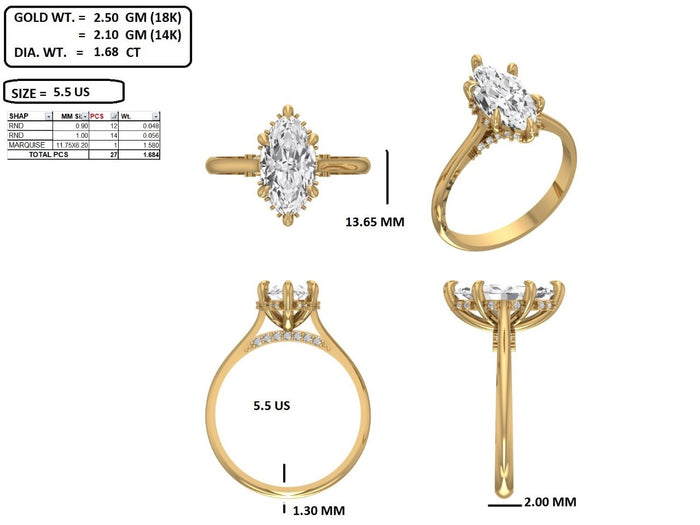
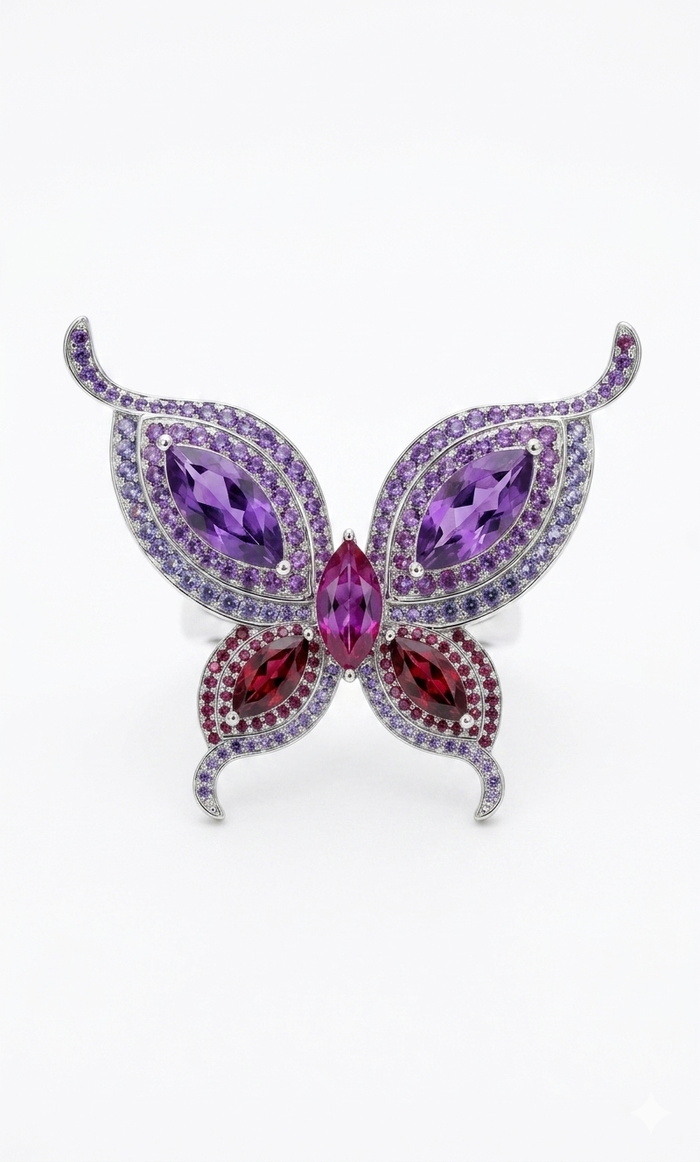

Plenty of months make do with one birthstone. October got two, and they could not be more different. One is a moody little galaxy that changes every time you tilt your hand. The other is the gem world's great shapeshifter, showing up in almost every color and fooling people for centuries. If you were born this month, congratulations: you get to pick a side. Or, as we'll get to, you don't have to.
Here is our family studio's field guide to opal and tourmaline: the lore, the science, a few myths worth retiring, and how we work October into a ring without making you choose.
Opal: a rainbow made of tiny marbles
The Romans called it opalus, a word that simply meant "precious stone," and they treated it as a symbol of love and hope. The Roman scholar Pliny wrote that opal could "equal the deepest and richest colors of painters" and "simulate the flaming fire of burning sulphur." Not bad for a first review.
That fire has a surprisingly tidy explanation. According to GIA, precious opal is built from sub-microscopic spheres of silica stacked in a grid. As light travels between those spheres it bends, or diffracts, and splits into the colors of the rainbow. So the flash you see is not pigment at all. It's light doing gymnastics through a stack of microscopic marbles.
A note from our bench: opal is a stone we never rush. Opal sits around 5 to 6.5 on the Mohs scale, and GIA notes that high heat or sudden temperature changes can cause it to fracture. That is why we treat it as a stone to be protected, not a stone to be exposed.
Opal isn't unlucky. It just had a bad publicist in the 1800s.
The "unlucky opal" myth, and who started it
You may have heard that opal brings bad luck unless you're born in October. Here is the plot twist: GIA traces that superstition to Sir Walter Scott's 19th-century novel Anne of Geierstein, not to any ancient belief. A single novel gave a gem a reputation that stuck around for generations. (Book clubs have done stranger things, but not many.)
Our take after more than thirty years at the bench, starting in Korea in 1994: luck comes from the people a ring is for, not from the stone. Wear the opal.
Tourmaline: the gem that couldn't stop being mistaken for other gems
If opal is the dreamer, tourmaline is the master of disguise. GIA notes that its name comes from the Sinhalese word toramalli, meaning "mixed gems," because for centuries people identified it as ruby, sapphire or emerald depending on its color. One Spanish conquistador reportedly washed off a green tourmaline crystal and was sure he'd found emerald.
It's an easy mistake. Tourmaline's color range is, in GIA's words, unrivalled: rich reds, pastel pinks and peaches, intense greens, vivid yellows and deep blues. A few of the fan favorites:
- Watermelon tourmaline: pink in the center, green around the edge, usually cut in slices so you can see the whole fruit.
- Rubellite: the trade name for the pink to red end of the family.
- Paraíba: the neon blue-green from Brazil, famous since the late 1980s, which owes its glow to copper.
Then there is the party trick. Tourmaline is pyroelectric, meaning it builds up an electrical charge when it's warmed. As Lang Antiques tells it, Dutch traders discovered the effect in 1703, and the charge was used to pull ash out of smoked pipes, earning tourmaline the old Dutch nickname asschentrekker, the "ash puller." The most practical birthstone ever, if you happen to own a pipe.
Tourmaline even had a royal fan. According to GIA, much of the pink and red tourmaline mined in San Diego County, California was shipped to China because Empress Dowager Cixi was especially fond of the color.
Which October are you? A quick cheat sheet
- You change your mind about your favorite color weekly: opal. Every angle is a new answer.
- You have a signature color and you commit to it: pink tourmaline. The Cixi energy is strong with you.
- You are the friend who is never quite what people expect: tourmaline, the original master of disguise.
- You like a secret only you know about: opal, hidden inside the band (more on that below).
- You want the pink, but on an everyday ring you'll wear through anything: read the next section.
How we wear October in the studio

Here is the gentle truth about opal: we love it, but we don't love it as the center stone of a ring you'll wear every single day. Softer stones and daily life are not best friends. So we give October two homes.
Inside the band. Our Stone Inlay® sets two birthstones flush inside the band of your ring, invisible from the outside and always there for you. October's inlay stone is opal, so you carry its fire close, tucked safely against your finger instead of out front taking the bumps. Stone Inlay® is complimentary on our pieces, and you can pair the opal with a second birthstone for someone who matters to you.
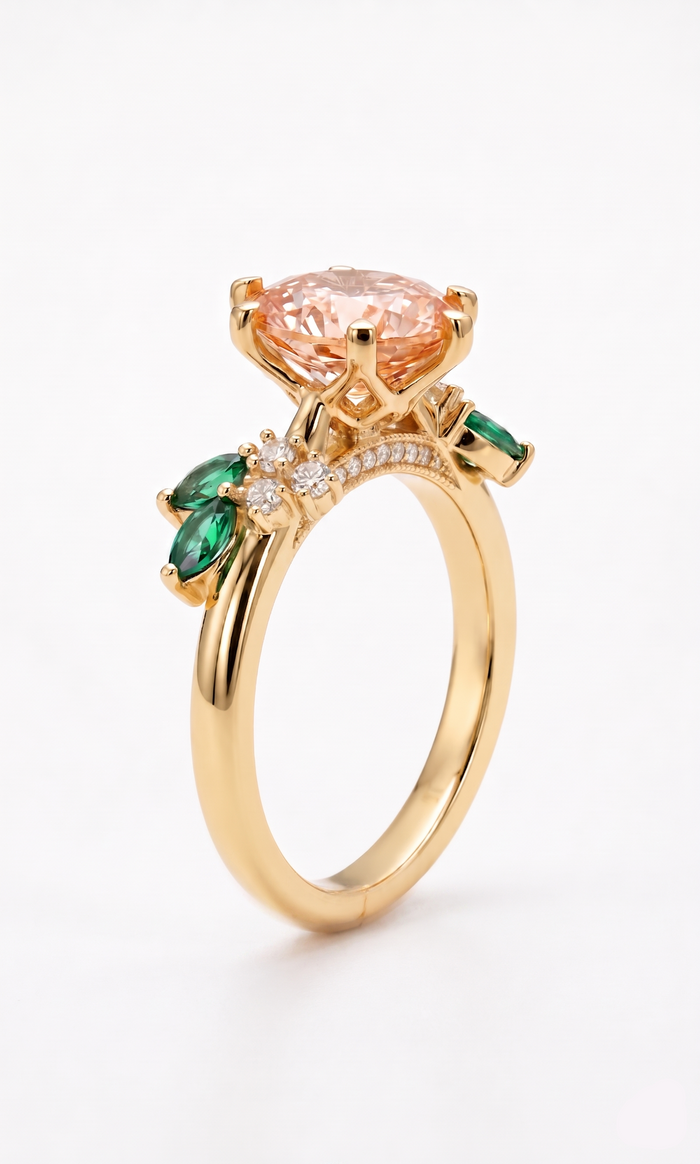
Out front, in pink. If tourmaline's rosy side is your color, lab-grown pink sapphire gives you that blush in a stone that sits at 9 on the Mohs scale, right behind diamond. A few of our favorites for pink-hearted Octobers:
- The Maribel, an emerald-cut pink sapphire framed by two baguettes. Quiet, even light.
- The Roseraie in alexandrite with pink sapphire petals, a little rose garden for the finger.
- The East-West Pink Sapphire Eternity Band, which stacks beautifully for an October birthday or anniversary.

Every one is made to order by our family team: you pick your gold and size, and Mr. Lee's bench takes it from there. It arrives in the Luther's Brown Box with free worldwide shipping and our lifetime warranty.
A little care, a lot of sparkle
If you already own an opal piece, GIA's advice is short and sweet: the only safe way to clean opal is warm, soapy water. Skip the steam, skip the harsh stuff, and keep it away from sudden heat. Think of it like a silk scarf. Gorgeous, beloved, not invited to the gym.
Whether you're team fire or team pink, October deserves a piece that feels like it was made for you, because it should be. Want opal hidden in your band, a pink center, or something entirely your own? Tell us about your idea and our family team will start sketching.